Summarize This Article with AI


Wondering how a YouTube channel actually builds its bank account? It’s a common myth that there is a fixed price for every video view, but in 2026, making money online through YouTube content is a mix of many factors. You mainly earn money when a viewer watches an ad or interacts with video ads.
Typically, YouTube creators earn around $0.002 to $0.025 per view on average. From ad revenue to brand deals, your YouTube income grows by keeping people watching your high-quality content for longer. This guide will show you how YouTube monetization works as we answer the question, “How much does YouTube pay per view?”
How Does YouTube Monetization Actually Work?
To start making a YouTube income, you must first join the YouTube Partner Program. This is the official way to earn ad revenue from your eligible videos. In 2026, you need at least 1,000 YouTube subscribers and 4,000 hours of watch time in a year, or you can get 10 million views on YouTube Shorts in 90 days.
Once you are in, advertisers pay YouTube to show video ads on your page. Then, YouTube takes about 45% of that money, and you get the rest. The money you keep goes into your Google AdSense account, where you see your YouTube earnings grow every month.
Why Doesn’t YouTube Pay a Flat Fee Per View?
There is no fixed YouTube pay-per-view rate because every video is different. Your YouTube pay changes based on ad demand and who is watching, meaning some creators get higher ad revenue than others. Also, not all ads are the same.
Some are skippable ads, while others are non-skippable ads that viewers must watch fully. If a fan uses ad blockers, you might not get any advertising revenue from that view. Even skipped ads can lower your total YouTube pay-per-click.
How Much Does YouTube Pay Per View?
On average, the YouTube pay-per-view is usually between $0.002 and $0.025. This means for every 1,000 views, you might get a few dollars or up to $25. If you reach a million views, you could earn between $2,000 and $25,000. It all depends on your ad rates and your niche audience.
Most creators focus on a million views as a big goal. But remember, two videos with the same view count can have very different payouts. The money advertisers spend is higher for long-form videos, which explains why longer videos often make much more revenue than YouTube Shorts.
Use YouTube RPM and CPM to Understand Earnings
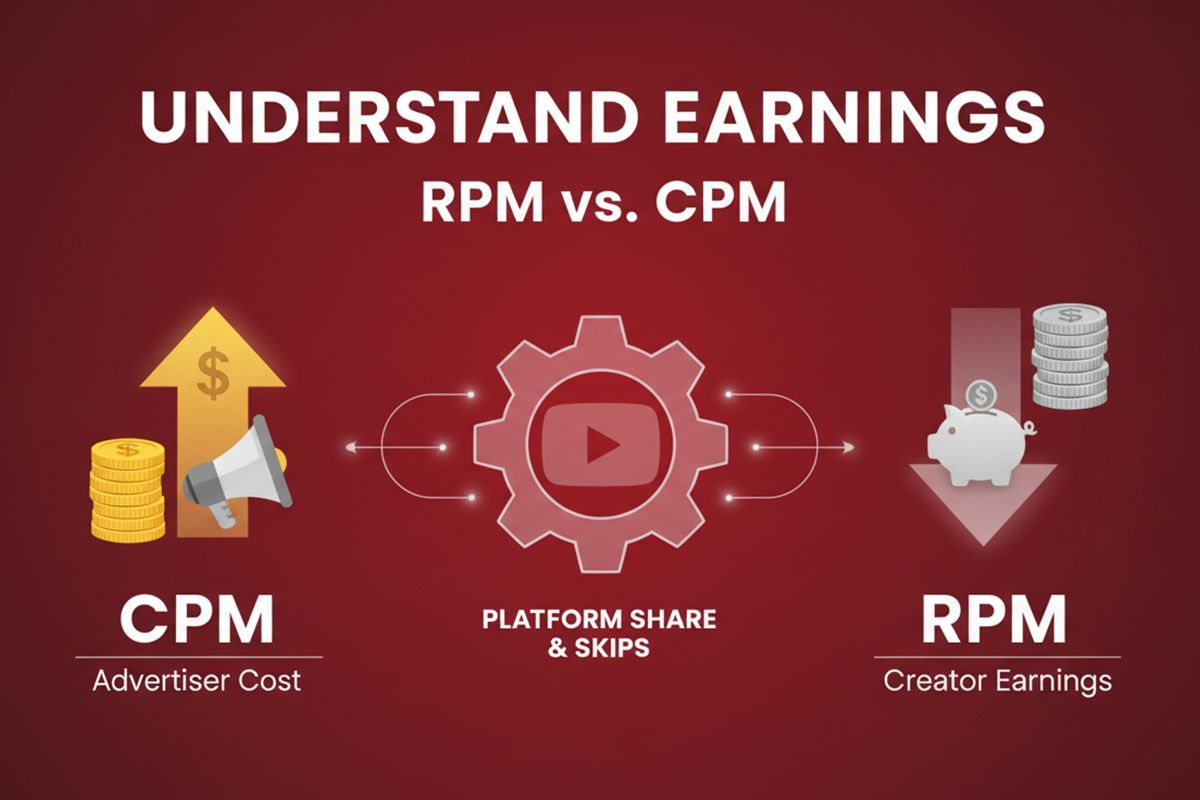
To see how much money you make, you should check your RPM and CPM. YouTube CPM is what advertisers pay for 1,000 ad views, and RPM is your real YouTube pay after the platform takes its cut. It includes ad revenue, channel memberships, and even super chats.
Your video engagement and video length both help push these numbers higher. The more people stay and watch, the more ad engagement you get. YouTube’s algorithm loves videos that keep people on the site. If you have high-quality content, you will likely see a better pay-per-view rate.
Examples: What Earnings Look Like at Different YouTube View Levels
Estimated earnings may vary based on ad monetization and engagement. Below is a breakdown of rough estimates to expect per view.
| VIEWS | TYPICAL REVENUE ESTIMATE (≈ $0.002–$0.025 per view) |
|---|---|
| 1,000 views | ~$2–$25 |
| 10,000 views | ~$20–$250+ |
| 100,000 views | ~$200–$2,000+ |
| 1,000,000 views | ~$2,000–$25,000+ |
Note: These are just estimates. Factors like ad type and ad placements can change these numbers a lot.
Why Do YouTube Earnings Vary Widely From Channel to Channel?
How much does YouTube pay you compared to someone else? It often depends on several factors, including:
1. Content niche
Your content niche plays a major role in determining how much you earn on YouTube. Advertisers pay more for niches like finance, business, technology, and health because they attract high-value audiences. In contrast, entertainment or general vlog content often receives lower ad rates due to broader, less targeted advertiser demand.
2. Audience location
Where your viewers live significantly impacts your earnings. Advertisers in countries like the United States, Canada, the UK, and Australia typically pay higher CPM rates. If most of your audience comes from regions with lower advertising budgets, your overall revenue per view will naturally be lower.
3. Ad type and viewer engagement
Different ad formats generate different payouts. Skippable ads, non-skippable ads, display ads, and bumper ads all have varying rates. Additionally, if viewers skip ads quickly, revenue decreases. Higher engagement, such as clicks and full ad views, increases advertiser value and boosts your earnings potential.
4. Watch time and retention
Longer watch time and strong audience retention can significantly increase revenue. Videos that keep viewers engaged allow more ads to be shown, especially mid-roll ads on longer content. Higher retention signals quality to YouTube’s algorithm, improving visibility and ultimately increasing monetization opportunities.
When YouTube Views Don’t Generate Any Money?
Sometimes a video view does not help you make money at all. This happens if the viewer watches through a device that blocks video ads. If your YouTube content is not friendly for brands, they might not run ads on it. This leads to very low YouTube ad revenue.
YouTube Shorts pay is also very different and usually much lower. Since YouTube shorts are so fast, they don’t have as many ad placements. Fans who pay subscription fees for YouTube Premium also don’t see ads. Instead, you get a small part of their fee based on their watch time.
YouTube Premium and Non-Ad Revenue Streams
Smart creators use many different revenue streams to grow. You can offer channel memberships or sell digital products like e-books. Many people also do brand deals or make sponsored videos, and they often pay much more than regular YouTube ads.
You can also make members-only videos for your biggest fans and create a steady YouTube income that doesn’t depend on ad views. Using super chats during a live stream is another great way to earn money. Your fans can pay to have their message stay at the top!
4 Tips to Increase How Much YouTube Pays Per View

Follow these quick tips to increase your YouTube earnings:
1. Create Longer Content Eligible for More Ad Slots
You have a better chance of increasing your YouTube earnings when you create long-form videos that allow for more ad placements and more mid roll ads. This gradually helps improve your overall revenue per view.
2. Target High-CPM Niches with Valuable Audiences
Choose topics with high ad demand and a strong niche audience to earn more. With high-CPM niches, you signal to YouTube’s algorithm that your content is valuable and has a high-performance rate.
3. Increase Watch Time to show more Ads
Boost your watch time by encouraging more video engagement. This allows ads to appear naturally, as it shows that viewers now stay longer on your videos. Do this by increasing your content quality and encouraging interaction.
4. Improve Ad Engagement with Compelling Intros and Topics
To boost your ad engagement, start using compelling intros and topics to keep viewers watching. Optimize video descriptions with relevant keywords, use eye-catching thumbnails, and incorporate storytelling. You can also get a skilled video editor to improve your video quality.
Frequently Asked Questions
1. How Much does YouTube Pay Creators per View?
Although it varies, YouTubers earn ad revenue around $0.01 to $0.03 per view, which is about $10–$30 per 1000 views.
2. How much does YouTube pay per View on Shorts?
Shorts earnings are usually lower because revenue comes from pooled ads and watch shares rather than individual ad impressions.