Summarize This Article with AI


Trying to figure out the best hashtags on Pinterest can feel confusing. Some people say to skip them, while others swear by them.
So, what’s the real deal? Pinterest hashtags still matter in some cases, but using them the right way makes all the difference. Random tags will not magically boost your reach.
This guide breaks down how to use hashtags on Pinterest. We’ll tell you what still works in 2026 and what doesn’t. Also, learn the common mistakes to avoid. Let’s dig right in!
Key Takeaways
- Pinterest hashtags are effective in 2026, but they are not as important as keywords or good SEO.
- Pick relevant hashtags to make your content reach people who’re already interested in your niche.
- Add hashtags at the end of pin descriptions to keep things neat and easier to read.
- Try a smart mix of trends and evergreen terms to make your Pinterest pins noticeable.
How Pinterest Hashtags Work in 2026

Pinterest has 631 million monthly users now, which shows how massive the platform still is for content discovery. That’s why users try all kinds of strategies, including hashtags, to boost their Pinterest visibility.
Hashtags work on Pinterest more like extra labels than a main discovery tool. You can place them inside descriptions, and they stay clickable, helping people browse related topics through hashtag searches. Think of them as backup support for your SEO on this powerful search engine. A good hashtag strategy works alongside keywords and strong visuals.
Benefits of Using Hashtags on Pinterest
Using hashtags might feel small, but it can still help your latest posts travel further. Here are some real benefits of adding tags to your Pinterest strategy:
- Get Your Pins Found by the Right People: The right tags help people find ideas they already care about. Smart hashtags connect your promoted pins to other users looking for similar topics through hashtag search results.
- Reach Beyond Your Current Followers: Even smaller creators can expand reach through hashtags on Pinterest ads. Popular hashtags place content in front of fresh audiences beyond followers, especially when paired with strong SEO and useful visuals.
- Build Stronger Brand Recognition: Brands often use branded hashtags to create familiarity. Over time, repeated exposure helps people remember your content and associate it with your business.
- Boost Your Pin Performance: Typing terms into the search bar helps Pinterest understand your content better. Actually, hashtags can give extra context since the Pinterest algorithm focuses heavily on relevance.
- Send More Traffic to Your Website: Using a good tagging system can improve visibility in search results. Plus, they help more people click through to your site, products, or articles, which grows long-term traffic.
Different Types of Hashtags on Pinterest
While creating a Pin, different hashtag styles help different goals, so mixing them correctly can improve reach and help your content perform better.
1. Broad Hashtag
Broad hashtags cover large topics with huge audiences. These tags usually attract high competition but still help expose content to wider groups across hashtags on Pinterest.
Beathought often uses broad lifestyle terms tied to food, and potatoes to keep content visible across major interest categories.
2. Niche Hashtags
More targeted tags connect your content with a specific audience group that is searching for that very topic. That’s why niche hashtags usually attract users who already care about your content, which improves engagement.
For instance, the Pinterest account Women Care uses highly specific tags like #weightlossforwomen, #bellyfatloss, and #loseweightinaweek to target users already searching for focused fitness topics instead of broad audiences.
3. Branded Hashtags
Companies create unique hashtags linked directly to campaigns, products, or communities. Brands across many social media platforms use them to improve recognition and encourage user participation. Studies show branded hashtags can boost brand awareness by around 50% through UGC and repeated exposure.
Think with AI pins a styled Nike shoe video and locks in the audience straight away with branded tags like #NikeStyle and #NikeP6000, making sure the content lands in front of Nike fans rather than just general sneaker browsers.
4. Trending Hashtags
Pinterest’s own research shows that engagement is strongly driven by discovery systems like trendy hashtags. It can increase engagement by over 7% by improving how trending and related Pins are surfaced to users. Fast-moving trends often appear inside seasonal hashtag feeds, shopping events, sports moments, or viral topics.
Mz.Manerz taps into the Christmas season by adding tags like #ChristmasDecor, #ChristmasInspo, and #Holiday to reach people who are already searching for festive ideas during that time of year.
5. Location-Based Hashtags
Location hashtags target users from specific cities, countries, or travel interests. Local businesses, creators, and influencers often use them to avoid attracting irrelevant hashtags traffic from random audiences.
Travel creator Meola Francesco keeps it location-specific by tagging pins with #visitparis, #parisjetaime, and #parisfrance, drawing in users who are already dreaming about or planning a Paris trip rather than just general travel browsers.
How to Find the Right Pinterest Hashtags
You can find good hashtags with a little research. Here are some useful tips for picking the right hashtags for your pins:
1. Use the Pinterest Search Bar
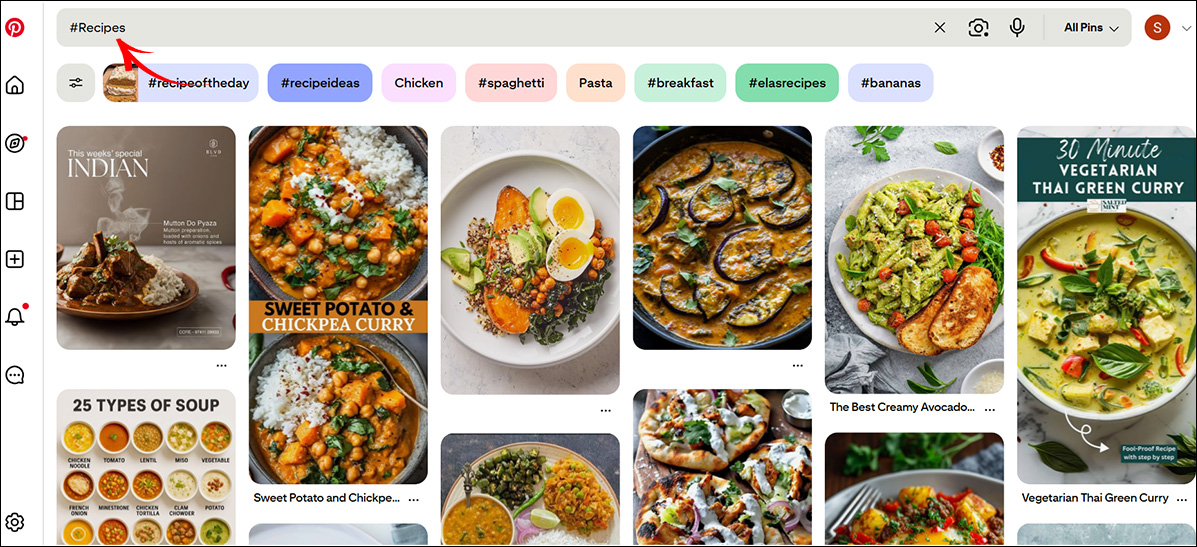
Typing #pin description brings a dropdown of hashtag suggestions showing popularity count and niche-specific tags. It helps pick relevant ones. Pinterest reports 80% of weekly Pinners discover new brands via search and recommendations.
2. Study Your Competitor Hashtags
Pinterest says that 96% of its searches are unbranded, which shows that there’s a strong opportunity for discovery when you use the right keywords and hashtags. Therefore, you should study top pins in your niche and check what hashtags they use on high-performing posts.
Look for repeating tags, niche keywords, and seasonal trends not just on Pinterest but also on other platforms. Then adjust those ideas to fit your own content style.
3. Mix Evergreen and Trending Hashtags
Evergreen hashtags stay useful year-round, but trending tags rise during specific moments or events. Combining both creates balance and helps us use hashtags on Pinterest more effectively.
A food creator might pair “easy dinner recipes” with a holiday cooking trend during the Thanksgiving season to attract short-term and long-term traffic together.
How to Use Pinterest Hashtags Correctly
Using hashtags correctly matters more than stuffing descriptions with random words that add zero value to your content.
1. Where to Place Hashtags in Your Pin Description
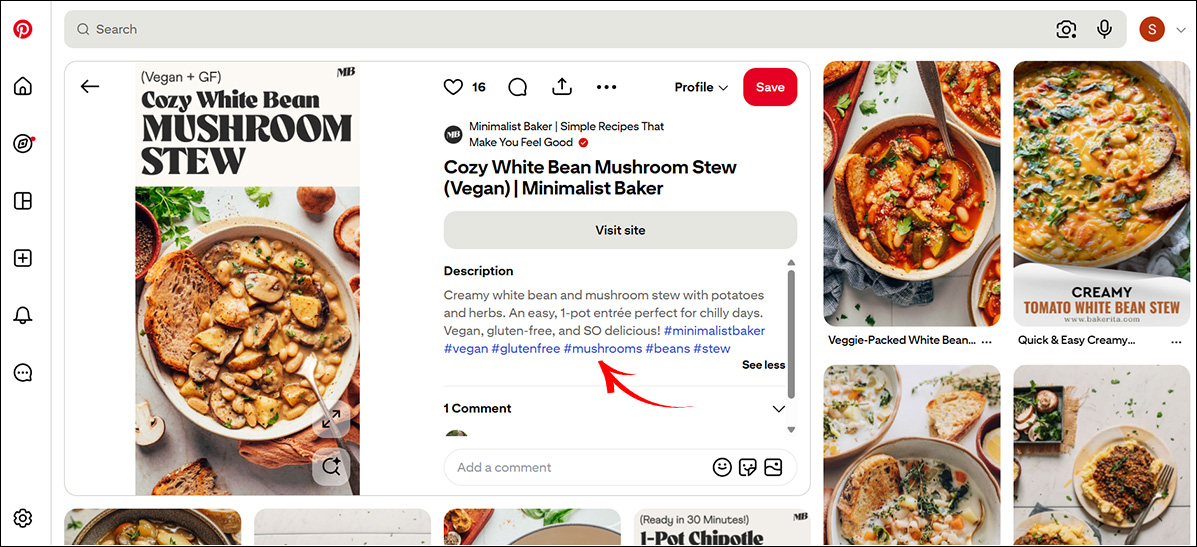
Place hashtags at the end of descriptions instead of scattering them throughout sentences. Clean formatting keeps descriptions easier to read and supports Pinterest’s role as a visual search engine. Pinterest also confirmed that hashtags still function as clickable discovery tools for landing pages or blog posts when users browse related topics.
2. How Many Hashtags to Add Per Pin
Pinterest recommends keeping hashtags limited instead of overloading every description to avoid looking spammy. Research and creator testing show that balanced hashtag use looks cleaner and performs better. Too many tags make descriptions look messy and overly promotional. Good Pinterest hashtags provide extra context without distracting readers from the main message.
Do Hashtags Work on Your Existing Pinterest Pins?
Adding hashtags to older content usually does not bring huge results. Pinterest tends to push the freshest pins higher in discovery, so updated hashtags on old pins rarely create major visibility boosts. Pinterest’s help center explains that recent content performs better in hashtag discovery and topic-based browsing.
Instead of editing older posts, create new pins for the same content and write updated descriptions using stronger hashtags. This approach gives your content a better chance of getting content discovered by people actively browsing for fresh ideas.
Pinterest also reports that 85% of weekly users have made a purchase based on Pins, showing how active discovery behavior drives engagement on newer content.
How to Track Whether Your Pinterest Hashtags Are Working
You cannot improve Pinterest marketing results without checking what actually works. Pinterest Analytics gives useful data that shows which hashtags bring stronger performance, whether you’re a blogger, influencer, or business owner.
Start by comparing impressions, saves, and clicks on pins that include hashtags versus posts without them. Watch how different tags affect visibility and which ones help users find your content faster. Pinterest Business tools also show engagement trends and audience actions over time.
Try different hashtag combinations across multiple pins and track results for a few weeks. This habit helps you improve your marketing strategies overall. For example, using such tactics can make users 3x more likely to click through to a brand website from Pinterest compared to other social platforms.
Pinterest Hashtag Mistakes That Hurt Your Reach
Small hashtag mistakes can quietly hurt visibility, so paying attention to these habits can save a lot of wasted effort.
- Using Too Many Hashtags: Don’t add dozens of hashtags because it makes the descriptions cluttered. Write a short and focused list that looks clean and performs better.
- Using Irrelevant Hashtags: Random hashtags confuse Pinterest and attract the wrong audience. You should stick with targeted tags in your niche and relevant content.
- Placing Hashtags at the Wrong Spot: Avoid scattering hashtags across sentences, as that hurts readability. Your hashtags should be at the end of the description to maintain a proper flow.
- Never Updating Your Hashtags: Online trends change quickly, so you should review hashtags regularly and replace outdated ones. Adding newer options tied to current interests will improve your hashtag results.
- Ignoring Relevant Hashtags: Broad tags bring heavy competition. Smaller, relevant, and right hashtags often connect your content with people already interested in your topic.
Conclusion
Long story short, Pinterest hashtags still matter, although they play a supporting role instead of running the whole show. Strong keywords, good visuals, and useful descriptions are what carry most of the weight.
Hashtags simply help drive traffic and give your content some extra visibility. You can start small to test different hashtags and track what works best for your niche. Soon, it will have an impact on your Pinterest game and give you better exposure. Happy pinning!
FAQ
1. Should I use the same hashtags on every pin?
No, you should switch hashtags based on topics, seasonal trends, and content type. Fresh combinations help Pinterest understand your new content better.
2. Can hashtags get my Pinterest account banned?
No, but stuffing descriptions with unrelated tags can look suspicious. Focus on clean, useful, and helpful hashtags.
3. How many hashtags should I use on Pinterest?
Most creators keep hashtags limited and targeted. A few strong hashtags usually work better than huge lists packed into one post.